
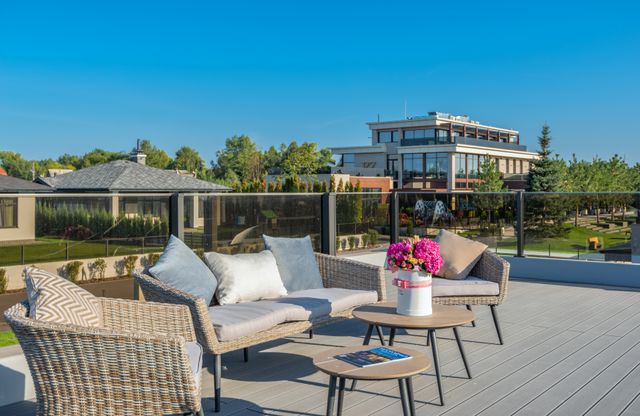
Choosing a decking material based on price alone, or on what looked good in a showroom photograph, tends to produce regret within a few seasons. Melbourne’s outer southeast delivers conditions that separate durable materials from those that seem adequate until they are not.
What Summer and Winter Do to Outdoor Decking Here?
The temperature during the summer season in Dandenong and nearby suburbs will always be very high, at least above the high thirties. The radiated heat from the pavement, fencing, and adjacent roofs will result in the surface temperature on the deck being much higher than the air temperature. The UV radiation during the summer season in the region will be sustained throughout the summer because of its geographical location; thus, the decay of the surface coating will occur very quickly.
During winter, there is a reversal of conditions. The surface will be subjected to moisture, occasional frost, and insufficient time for drying. This will lead to mould, swelling at board joints, and cracking of timber that is not properly sealed. It should be noted that the material which copes well with one condition may not necessarily cope with another one.
Merbau and Spotted Gum: The Hardwood Standard
Merbau is the decking hardwood that’s most widely used across Australia, and for good reason. Natural oils within the wood itself give it an inherent resistance to drying out and cracking on the surface, which happens all too often in Melbourne’s hot summers with less dense timbers. Plus it holds fixings well and suits most of the brick and rendered exteriors that you see in Dandenong’s older suburbs.
Spotted gum is one of the top native alternatives, with a higher hardness rating on the Janka scale and an increased natural resistance to splintering when there’s heavy foot traffic. It also weathers really well, turning a silver-grey colour that gives a deck a more modern and natural look. However, all hardwoods need regular oiling to keep the surface intact and that’s something that’s going to depend on the specific type, the coating product being used and how much sun and moisture the deck gets throughout the year.
Treated Pine: The Accessible Option and Its Limits
Treated pine is pretty cost-effective and you can get it just about anywhere. Its H3 treatment provides some level of protection against decay and insects when exposed to the elements, which makes it a pretty practical choice for ground-level decks in areas with a bit of moisture, but sealed and maintained properly.
However, if you try to push it too hard, its limitations become clear, especially in high-traffic areas, when it’s exposed to a lot of moisture and when the maintenance schedule isn’t kept up. Treated pine needs to be recoated a lot more frequently than hardwood to keep it looking good, and it’s a lot more prone to checking when it responds to Melbourne’s seasonal moisture patterns.
Composite Decking: Where It Earns Its Place
Decking Dandenong homeowners with heavy tree coverage above the deck area, like you often see in Dandenong’s older streets, find composite decking earns its place particularly well. It’s made from a combination of wood fibre and recycled plastic, and for good reason; it’s a low-maintenance option. You don’t need to oil it, you don’t need to seal it and just an annual clean is all that’s needed to keep it looking good. It’s also resistant to staining from leaf tannins, which makes it a lot easier to clean.
There are two limitations to be aware of before you make up your mind, though. Composite boards in direct sunlight can get pretty hot underfoot, especially if you’re walking on them barefoot. But lightening the colour and adding a bit of shade can address that pretty easily. Some of the older composite products faded a lot within a few seasons, which wasn’t ideal. But the good news is that the newer products from well-established manufacturers do a lot better in that regard, so just check the UV warranty before you buy to be safe.
According to Australian standards for timber and composite decking, material selection and structural requirements for outdoor structures are governed by the National Construction Code, which sets minimum performance benchmarks for safety and durability.
What Maintenance Actually Involves by Material?
The maintenance requirements differ depending on the material, and the right schedule will depend on the specific species, the coating system used and how much sun, moisture and traffic the deck gets:
- Hardwood timbers need periodic oiling to keep them looking good and in good condition; how often will depend on the product, species and exposure level.
- Treated pine needs to be sealed at installation and then recoated more frequently than hardwood, especially after hot summers, and it’s worth keeping that in mind.
- Composite decking, on the other hand, just needs an annual clean to keep it looking good.
Honestly though, for most homeowners who use their deck a lot in summer but don’t tend to it as much in winter, it’s the maintenance reality that tends to matter most.