

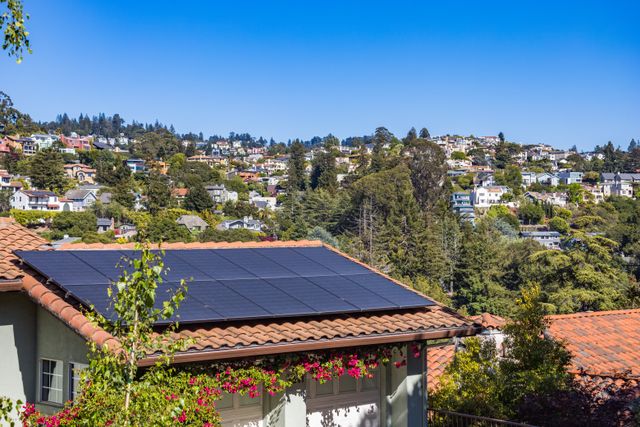
The visible problem is only one layer: A roof may have many panels, but the best system depends on how and when the electricity is actually used. Inverter limits and tariffs help Sydney households match array size, orientation and control to the household’s demand profile, tying everyday convenience to reducing grid use without overspending. If most power is used by the home after sunset, then large generation in the daytime can be exported cheaply. A clear check of future electric appliances should precede promises about a system whose production aligns more closely with everyday use.
It helps to view the task not as a purchase but to ask if large daytime generation can be exported cheaply when the home uses most power after sunset. Instead interval data and roof shading need to be understood by matching array size, orientation and control to the household’s demand profile. This discussion views east-west orientation as useful evidence, not as something to put off until last. Sydney households looking to reduce their reliance on the grid without breaking the bank can evaluate cost, timing and expected performance on the same practical basis, with inverter limits as a guide.
Interval data: the first real-world signal
For those people solar installation Sydney is relevant when a lot of daytime generation can be exported cheaply if most of the home’s power is consumed after sunset. Tariffs For Sydney households wanting to reduce grid usage without breaking the bank, the phrase becomes a decision on matching array size, orientation and control to the household’s demand profile rather than a generic purchase. Before someone commits to a scope, schedule or level of investment, a credible recommendation should relate future electric appliances, interval data and roof shading.
The practical picture is interval data, roof shading and east-west orientation. Here the roof shading is influenced by interval data, and the final sequence can be affected by eastwest orientation. Showing those links helps Sydney households looking to cut down on grid use without overspending, to tell the difference between work that’s vital to a system whose production is more in line with everyday use, and refinements that can wait for a later stage.
The Connection Between Roof Shading and East-West Orientation
Practical progress tends to follow four linked actions design monitoring and export settings, analyse consumption, survey the roof and switchboard and finally model likely generation. Completing design monitoring and export settings before analyse consumption protects the treatment of inverter limits from an untested assumption. The later steps, especially survey the roof and switchboard and model likely generation, then become checkpoints for east-west orientation rather than improvised reactions.
Choosing the maximum panel count can often lead to problems if someone does not understand the self-consumption or grid constraints. This shortcut may ignore future electrical appliances, making the model likely to generate a problem when the correction is more disruptive. A clear start gives Sydney households who want to reduce their reliance on the grid, without paying over the odds, a clearer path to a system whose production is better aligned with everyday use, without having to pay twice for the same uncertainty.
How to analyse consumption for a system whose production is better suited to
In the future electric appliances and interval data still have to respond to tariffs during ordinary moments people judge the outcome. The completed solution. For Sydney households seeking to reduce grid use without exceeding their budget, a system that better matches everyday use only matters if it can withstand normal use and roof shading. When design follows the movement of electricity through the day, solar becomes a household tool instead of a roof ornament.
Good service Also explained how inverter limits were assessed, how east-west orientation was handled and what model probably generation demonstrated. Historical records of matching array size, orientation and control to the household’s demand profile allow for future maintenance to start with data interval evidence rather than recollection. They also show to another professional why the design monitoring and export settings, consumption analysis, roof and switchboard survey and likely generation modelling were ordered in that way.
The decision should still make sense if we look at whether a system whose production is more adapted to everyday use remains after changes in east-west orientation or the original pressure disappears. A subsequent review can check inverter limits against east-west orientation, and check whether model likely generation still supports the intended result. The review sets out a clear path for adjustment for Sydney households wanting to cut back on grid use without overspending, without throwing out work that continues to perform. When the array size, orientation and control are aligned to the household demand profile, it stays understandable through normal use and the response becomes a lasting improvement rather than a temporary reaction.